

Scaling EV Infrastructure to Support Nationwide Electric Mobility Adoption
Issues
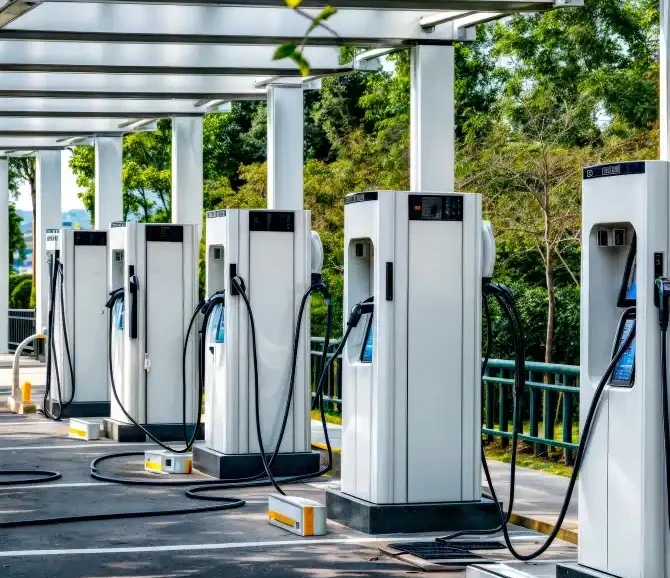
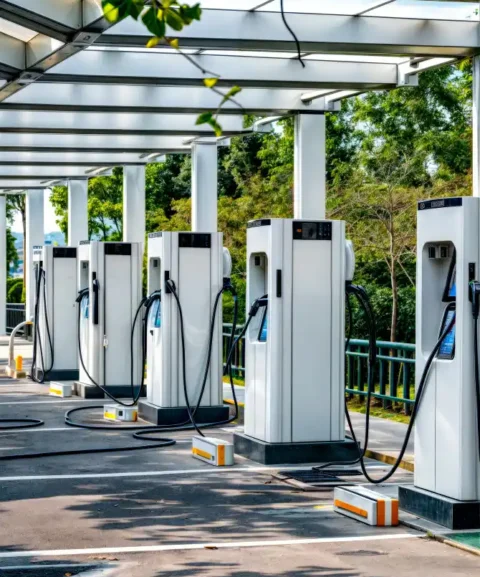
The EV infrastructure landscape lacked cohesion. Charging stations were clustered in wealthier urban areas, with rural and industrial zones underserved. Utilities were uncertain about grid upgrade timelines and load balancing needs. Building codes did not require EV readiness, and there was no consistent permitting or safety framework for chargers. Investment was hampered by unclear revenue models and user uptake projections.
Solution
We developed a National EV Infrastructure Framework covering physical planning, policy, pricing, and governance. The plan included zoning maps for urban, inter-urban, and industrial EV infrastructure; grid load management models; and recommendations for EV-ready building regulations. A centralized EV Infrastructure Portal was proposed to streamline permitting, data sharing, and investor access. Capacity-building modules for utilities and municipalities were also developed.
Approach
- Mapped EV adoption trends and future projections by governorate
- Simulated grid impacts under low, medium, and high EV uptake scenarios
- Benchmarked international EV-ready building code examples and incentive models
- Identified fast-charging demand clusters near industrial zones and logistics corridors
- Designed permitting workflows and user registration for station operators
- Built financial models for public-private station rollouts and ROI timelines
- Delivered multi-agency governance model for compliance and quality assurance
Recommendations:
- Require EV-ready conduits in all new residential and commercial buildings
- Set national targets for public fast chargers per 100 km by region type
- Create a transparent national registry for station locations and performance
- Use smart meters to offer time-of-use tariffs for residential charging
- Offer capital grants or soft loans for early-stage private operators
- Monitor KPIs on uptime, grid reliability, and regional equity of access
Engagement ROI
Post-framework implementation, national public charger coverage increased by 240%, reaching 1,400+ units across the Kingdom. Grid disruption incidents dropped to <1.2%, and utility operators successfully adjusted load balancing plans for peak EV use. Investment commitments exceeded SAR 520 million, and new regulations enabled over 6,000 residential units to be EV-ready in the first 12 months. EV user satisfaction climbed by 38 points, based on survey results.