Saudi port capacity utilization 2026 sits at the center of Vision 2030’s logistics narrative, but the sources point to a practical reality. Utilization is not only about cranes and berths. It is also about how well terminals, inland links, and operating models work together. Saudi Arabia is positioned at the crossroads of three continents, and its ports are described as among the most advanced in the region, including King Abdullah Port and Jeddah Islamic Port. That promise raises expectations for seamless operations, yet it also increases the downside risk when small constraints ripple through the network.
On the eastern coast, privatization and consolidation are meant to improve alignment and flexibility. Saudi Global Ports Group (SGP) was awarded four 20-year concession agreements by Mawani to operate multipurpose terminals at King Abdulaziz Port Dammam, Jubail Commercial Port, King Fahad Industrial Port Jubail, and Ras Al-Khair Port. In 2024, SGP handled more than 4 million TEUs across its ecosystem of seaports and inland terminals. That ecosystem also includes inland assets such as the rail intermodal Riyadh Dry Port Ecosystem. The bottleneck risk in 2026 is execution risk: integration and modernization must translate into day-to-day throughput, not just signed concessions.
Where 2026 Bottlenecks Can Surface Fast
Operational transition is one pressure point. SGP began operations at the Jubail Container Terminal (JCT) under a long-term privatization agreement spanning 30 years. The company said integrating JCT into its existing eastern-coast network enables improved operational alignment, capacity utilisation, and more flexible supply chain solutions. It also committed to invest SAR 2 billion over the concession period to upgrade infrastructure and deploy advanced equipment, with the stated aim of accommodating larger vessels. These are positive signals, but they also define the bottleneck: if upgrades, equipment deployment, or integration timing lag, utilization can spike unevenly across connected ports and inland nodes.
Cost and efficiency pressures in 2026 can compound physical constraints. A separate 2026 business report described a shift toward performance-based support and highlighted a 35% jump in diesel prices as part of 2026 adjustments. Analysts in that report expected short-term profit margin compression and a rapid acceleration in operational efficiency and technological adoption. For ports and logistics chains, this kind of pressure can expose weak handoffs, waiting time, and suboptimal routing. When every extra move costs more, congestion becomes more visible, and capacity utilization can become harder to manage predictably.
Policy momentum is strong, but it raises the bar for delivery. A Reuters item reported Saudi Arabia’s investment minister saying that as of end-2024, 85% of Vision 2030 initiatives were completed or on track. Industry forums also emphasize digitisation, AI, blockchain, and IoT as levers to improve efficiency and reduce costs, alongside sustainability and workforce development. The bottleneck threat for Saudi port capacity utilization 2026 is therefore not a lack of ambition. It is the challenge of converting ambition into coordinated operating standards across ports, terminal operators, regulators, and inland logistics so that “seamless operations” remain true during demand spikes.
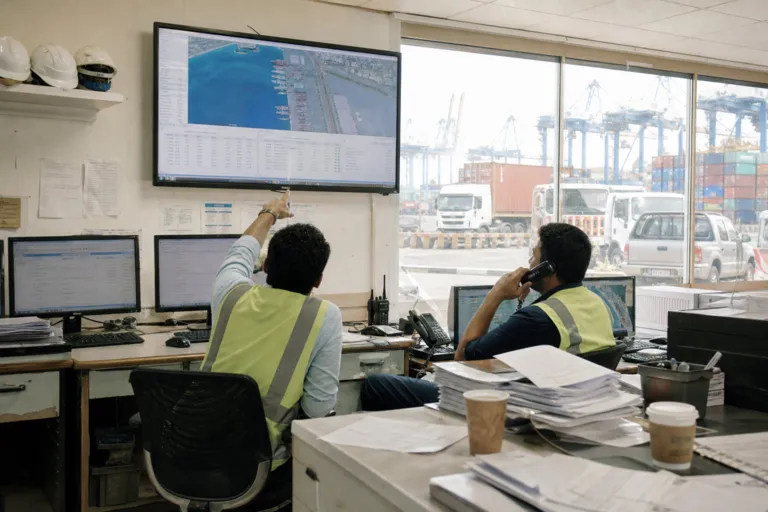
The most credible mitigation theme in the sources is connectivity across the full logistics ecosystem. SGP described stronger connectivity between ports, inland logistics facilities, and supply chain ecosystems as a way to support more efficient cargo flows and reinforce resilience. That framing matters for 2026, because utilization problems often appear first at interfaces: gate processes, intermodal transfers, and inconsistent digital workflows. Vision 2030’s logistics goals depend on keeping those interfaces stable while modernization projects, new operating models, and higher cost discipline all arrive at once.
What does “Saudi port capacity utilization 2026” depend on in the cited sources?
Which specific ports and terminals are tied to new concession activity?
What investment figure is stated for upgrades that could affect throughput?
What progress indicator is given for Vision 2030 initiatives?