
A Saudi mobility data marketplace is a way to package and share transport data so it can be used and paid for. The goal is simple. Turn large mobility datasets into services that improve how cities run. Mobility data analytics already supports better public transit, ride-hailing efficiency, and smarter planning. This fits the national push toward a data-led economy and digital-first government.
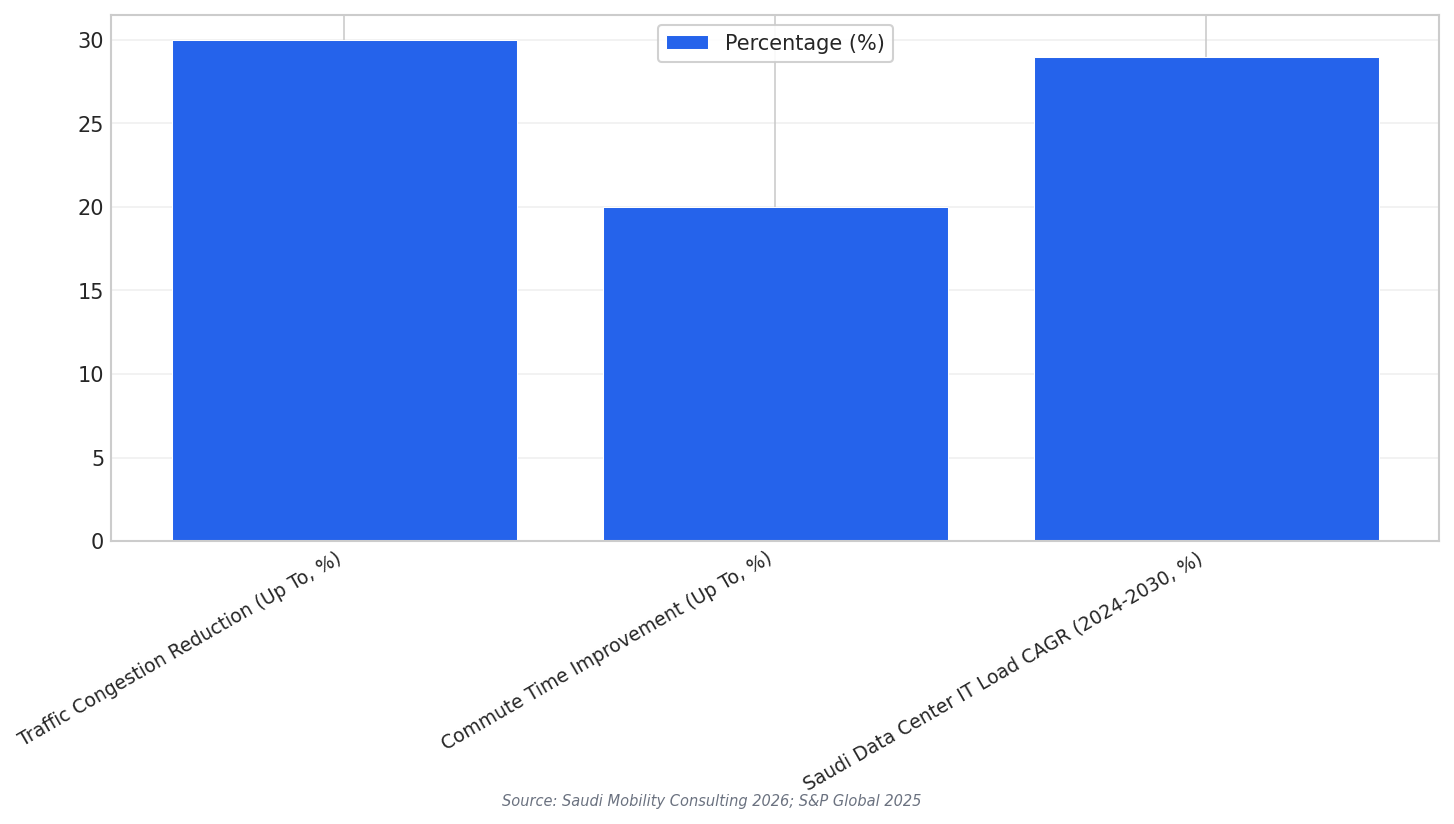
The business case starts with outcomes. One study cited in Saudi mobility research says cities using mobility data analytics can reduce traffic congestion by up to 30% when bus and train schedules match peak travel times and routes adjust to passenger flow. Another finding says commute times can improve by up to 20% in cities that use data analytics in urban planning. For marketplace buyers, these outcomes are what the data is worth. They also set clear targets for what “good data” should help achieve.
In practice, marketplace supply comes from many systems. Public transport generates demand signals that help optimize routes, schedules, and vehicle capacity based on real-time need. Ride-hailing data can show high-demand locations, peak times, and popular routes. Cities can also use this data to design designated pick-up and drop-off areas. When these datasets are standardized and priced, they become repeatable products instead of one-off reports.
What Makes Mobility Data Monetizable in Saudi Arabia
Monetization depends on trust and access. Saudi Arabia launched an Open Data Portal that enables public and private sectors to access and contribute datasets across areas like health, education, and the economy. SDAIA also plays a strategic role by setting national standards for data governance, promoting ethical AI adoption, and enabling open data frameworks. For a marketplace, this kind of structure can make data easier to share in a consistent way, which supports licensing and commercial use.
Infrastructure matters too. S&P Global reports the Saudi Arabia data center market has strong momentum, with the sector’s IT power load projected to increase at a 29% CAGR through 2024 to 2030. It also names Center3, Damac Data Centers, and Quantum Switch Tamasuk, and notes players like Gulf Data Hub, Ezditek, DataVolt, and Mobily. A growing data center base can support larger datasets, faster processing, and more reliable delivery for marketplace customers.
Demand is also rising because smart mobility is expanding in Riyadh through projects like the Riyadh Metro, smart traffic management systems, and integrated public transit. In parallel, Ken Research values the Saudi Arabia AI for Smart Urban Mobility Market at approximately USD 1.1 billion. Government agencies are described as the leading end-users for AI mobility solutions. For a Saudi mobility data marketplace, that points to a clear buyer group that needs reliable data products for planning, oversight, and performance improvement.
What is a Saudi mobility data marketplace?
What measurable improvements can mobility data analytics support?
Who are key buyers of mobility data and analytics in Saudi Arabia?
What supports marketplace scale beyond the data itself?