Saudi Arabia’s move into electric mobility is no longer theoretical. EV registrations increased by 425% between 2021 and 2023, rising from 375 vehicles in 2021 to over 12,000 by the end of 2023, according to Saudi Ministry of Investment data cited in a market overview. Vision 2030 frames fleet action most clearly in Riyadh, where the Saudi Green Initiative sets a target for 30% of vehicles to be electric by 2030. For companies planning Saudi corporate fleet electrification, the immediate challenge is execution: selecting vehicles, building charging access, and aligning procurement with policy timelines while keeping budgets predictable.
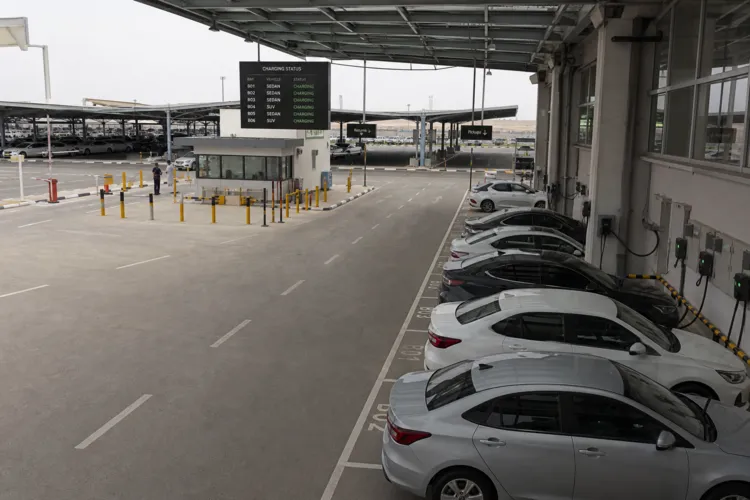
Charging availability is moving quickly, and it changes how fleets can structure operations. One report cites public charging stations growing from 150 in 2022 to over 1,000 by early 2024. The Saudi Electricity Company has also announced plans to install an additional 3,500 charging points across 1,000 locations by the end of 2025, tied to an investment of SAR 500 million (USD 133 million). Separately, EVIQ—a joint venture between PIF and the Saudi Electricity Company—targets 5,000 fast chargers across 1,000+ locations by 2030. For fleet planners, these milestones support phased deployment strategies that match route density and depot needs.
Leasing and TCO Models: Turning Targets Into Procurement Reality
Leasing and TCO-led procurement matter because the market is still in a build-out phase and many operators lack internal electrification capabilities. IndexBox notes that fleet electrification services—financing, leasing, charging-as-a-service, and telematics—are underserved, even as corporate and government fleets need bundled solutions that include vehicles, charging hardware, software, and maintenance. In electric light commercial vehicles (eLCVs), IndexBox also reports battery pack costs in Saudi Arabia declining by 8–12% year-on-year, with LFP chemistries gaining preference for fleet applications due to lower TCO and improved thermal performance. This supports leasing structures that translate declining battery costs into clearer monthly economics.
Demand signals are reinforced by top-down purchasing power. Knowledge Sourcing states that Vision 2030’s electrification of government and municipal fleets drives committed, large-volume demand for commercial vehicles such as buses and utility vans, plus passenger vehicles for public services. Mordor Intelligence highlights a 10-year government purchase commitment for up to 100,000 Lucid units, and also notes that passenger cars held 76.81% share of the Saudi EV market in 2025 while commercial vehicles are forecast to expand at a 24.53% CAGR through 2031. For corporates, a TCO model can align vehicle choices with duty cycles, while leasing can reduce exposure to residual-value uncertainty in a fast-changing supply landscape.
Supply-side plans and industrial policy add another layer to fleet decisions. IndexBox describes eLCVs as less than 2% of the total LCV parc in Saudi Arabia as of 2026, with the overall LCV parc estimated at approximately 1.1–1.3 million units. The same source says corporate sustainability mandates and Saudi Arabia’s Net Zero 2060 target are compelling logistics operators and retail franchises to electrify 15–25% of their light commercial fleets by 2030. Meanwhile, domestic manufacturing targets are ambitious: YoCharge cites a combined domestic EV production capacity target of 310,000 units by 2030 (CEER + Lucid), and IndexBox’s BEV report references 300,000 annual EV production capacity domestically by 2030. Leasing and TCO approaches help fleets scale now, while keeping optionality as local supply matures.
What Vision 2030-related EV target most directly affects fleets in Riyadh?
How fast is Saudi Arabia’s charging network expanding?
Why do leasing and TCO models matter for Saudi corporate fleet electrification?
What is happening with battery costs for electric light commercial vehicles in Saudi Arabia?
How large is the Saudi light commercial vehicle parc, and how big is eLCV penetration?