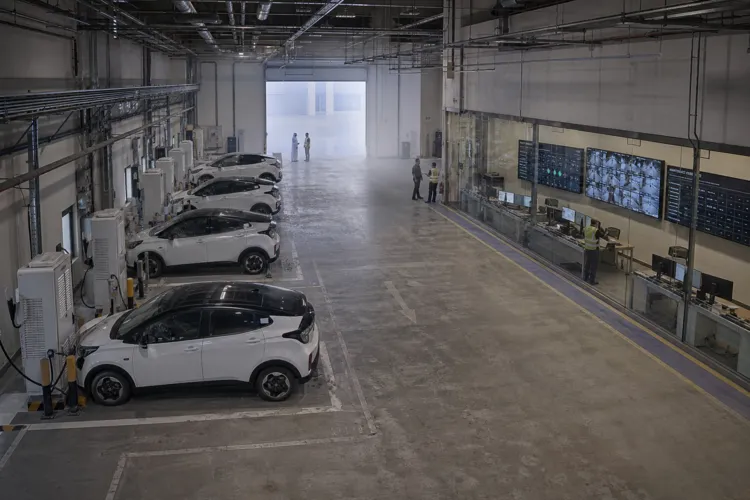
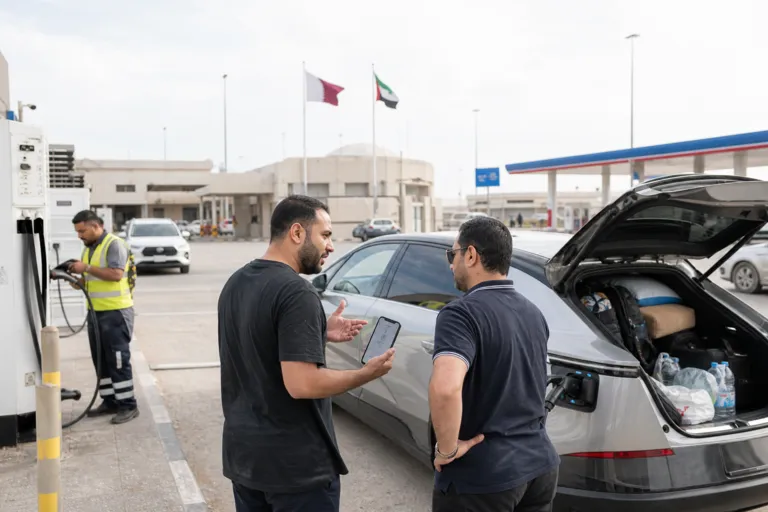
Cross-border driving depends on confidence. For EV drivers, that confidence is tied to charging visibility, reliability, and accessibility. One industry view puts it plainly: a charger that is visible, accessible, and consistently functional will get used, while one that is tucked away or poorly maintained will not. This is where interoperability matters. A GCC EV charging roaming agreement can reduce the moments where drivers get stuck between networks, apps, and payment steps. It can also help align how charging is found, started, monitored, and paid for across borders.
The urgency is rising because EV adoption is rising. PwC cited global electric car sales surpassing seventeen million units in 2024, with projections to exceed twenty million in 2025. That growth raises practical questions for mobility systems, including in the GCC. More EVs on the road means more charging sessions, more customer support issues, and more demand for consistent user experiences. Roaming is not only about convenience. It is also about operational coordination, so that drivers traveling across borders are not forced to re-learn how to charge every time they enter a new market.
Interoperability Is Also a Data and Operations Problem
Interoperability has a digital backbone. One example from outside the GCC shows what “integrated” can look like in practice. ACMobility’s mobile charging service is integrated into its Evro platform, allowing users to locate available charging vehicles, request service, monitor charging sessions, and process payments digitally. Operationally, it focuses on rapid top-ups rather than full sessions, typically moving vehicles from around 20% to 80% state of charge. The GCC EV charging roaming agreement can borrow this lesson: roaming is not only about hardware access. It is about unifying discovery, session control, and payments so the experience stays coherent across networks and geographies.
But connected charging brings systems requirements. Research on charging demand scheduling notes that charging infrastructure operational systems need to monitor grid status, renewable power generation, and EV charging in real time, while maintaining communication with both EVs and the grid through cloud systems. It also highlights that fast charging times, from a few minutes to several hours, require highly automated control and high communication frequencies, which can create additional power load. It may also raise privacy and regulatory concerns, because communication data can include personal and travel information. A roaming agreement must therefore consider security, privacy, and governance as much as it considers user convenience.
Reliability problems are felt by drivers in simple ways. A road trip example shows how a charging stop can succeed but still disappoint. A driver found a station with two charging cables where the first cable did not want to connect, but a second attempt worked. After nearly an hour, the driver realized the site’s charging capacity was 19 kW, which delivered limited energy in that time. Interoperability does not fix every constraint, but it can reduce avoidable friction. If roaming helps drivers compare sites, understand key details, and trust that authentication and payment will work, it strengthens the overall case for cross-border EV travel.
Cross-border mobility is also linked to clean power. PwC warned that if charging power still comes from fossil fuels, the environmental benefit is drastically diminished, and argued that the next leap is weaving electric mobility and solar energy together. Yet it also noted barriers, including that grids and existing charging solutions were not designed for the dynamic needs of combined solar-EV systems, and that high initial costs remain an obstacle for many. A GCC EV charging roaming agreement can still be a practical unlock. It can create a common layer for access and payments while the region works through grid readiness, cost hurdles, and the broader shift toward cleaner charging supply.
What is a GCC EV charging roaming agreement meant to achieve?
Why does interoperability matter if more chargers are being built?
What do global EV sales trends imply for cross-border charging needs?
What operational capabilities do interoperable charging systems need?
How can digital platforms support roaming-like experiences?