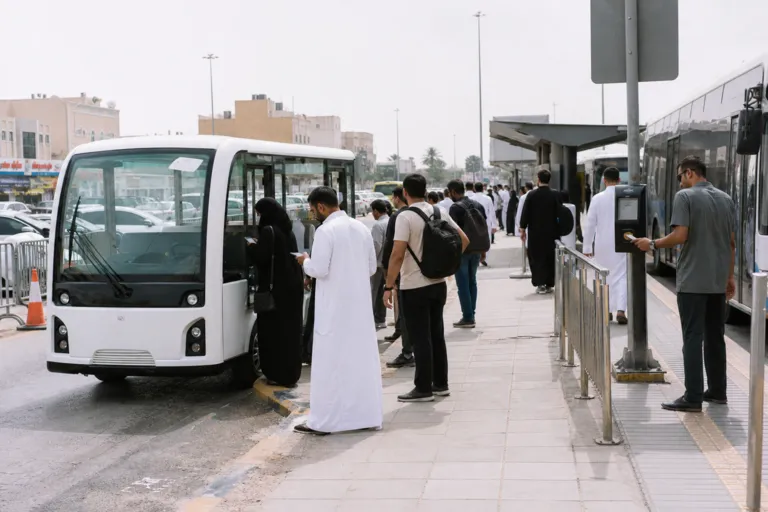
Public transport succeeds when it is easy to start and finish a trip. That first and last mile is where many systems lose riders. A Riyadh on-demand bus service built around 15 zones aims to close that gap with flexible pickups and drop-offs, in the places and time windows where fixed routes do not “pencil out.” That approach aligns with a broader trend described as app-enabled, on-demand microtransit designed to fill gaps, especially in lower-density areas and late-night service windows. The goal is simple. Make the access trip feel like part of the network, not a separate problem.
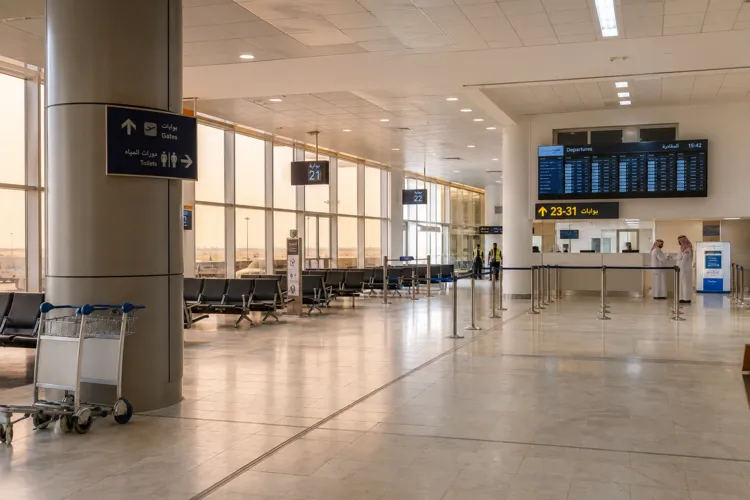
This matters more now because Riyadh has a powerful rapid transit spine to connect into. CNN reports the Riyadh Metro launched in December 2024. The automated rapid transit system spans over 176 kilometers across six lines. It links key points across the capital, including King Khalid International Airport and the King Abdullah Financial District (KAFD). CNN also describes it as the world’s longest driverless metro system. Yet even with a major metro, riders still need a reliable way to reach stations. That is the practical job of on-demand zones.
How 15 Zones Reinvent the Access Trip
A zoned design can make service easier to understand. Riders think in neighborhoods, not abstract routes. In a 15-zone model, each zone becomes a service “catchment” that feeds nearby rapid transit stops and key local destinations. The concept mirrors the wider microtransit logic: fixed routes remain the backbone, but cities add a third layer to fill gaps. In Riyadh, this layer can help riders handle large or unfamiliar stations. CNN notes stations such as KAFD and Qasr Al-Hokm are huge and can feel overwhelming to newcomers, even though staff are usually available to assist.
The clearest win is simpler transfers. On-demand buses can time trips around metro entry points and reduce uncertainty around the “last step” of a commute. This can also support urban development goals tied to the network. CNN quotes Ibrahim bin Mohammed Al Sultan, CEO of the Royal Commission for Riyadh City, saying the project will reshape the capital’s image and redefine mobility for residents and visitors, and that it aligns with economic, social, environmental, and urban development objectives. First-and-last mile service is where those promises become daily behavior.
There is also a systems lesson in what other cities are doing, even if the numbers are not Riyadh-specific. Gulf News describes Dubai’s autonomous zone covering 12 square kilometres and integrating several self-driving services, including robobuses and roboshuttles over 20 km of dedicated roads, plus delivery robots serving a 3.8 km last-mile drop-off zone. The point is not to copy the vehicles. It is to copy the integration mindset. A Riyadh on-demand bus service can be the connective tissue that turns separate modes into one managed network.
The most important design choice is to keep the on-demand layer focused. Use it where a full route does not pencil out, and where it solves specific access problems. A 15-zone framework can also make it easier to manage service rules, pickup points, and transfers to rail. This is the shift many cities are making: from simply adding infrastructure to designing the operating system of mobility. In Riyadh, the metro provides scale. On-demand buses provide reach. Together, they can make public transport feel complete from door to station to destination.
What is a Riyadh on-demand bus service meant to do?
Why does first and last-mile service matter if Riyadh has a metro?
What key places does the Riyadh Metro connect that on-demand zones could feed into?
How do other cities frame on-demand and integrated mobility?