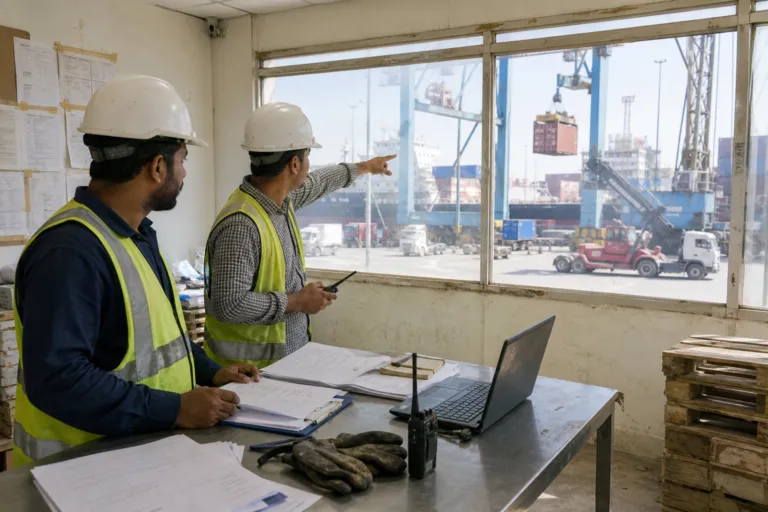
Saudi maritime port concession privatization is accelerating through long-duration operating models. In June 2025, multiple 20-year concession agreements were announced for existing terminals. The stated logic is practical. Operators commit capital to upgrade facilities and buy equipment. In return, they run the terminals over a long period and aim to raise efficiency and resilience. This shift matters for both coasts. It touches Red Sea gateways like Jeddah and Yanbu, and the Gulf side logistics ecosystem tied to Dammam and inland nodes like Riyadh.
On the Gulf-linked side, Saudi Global Ports (SGP) received four 20-year concession agreements and said it plans to invest more than 700 million Saudi Riyals (about USD 187 million). The plan focuses on upgrading terminals and purchasing new equipment. SGP also said it aims to integrate the four multipurpose terminals with its existing operations across Dammam and Riyadh. The company already operates container terminals at King Abdulaziz Port Dammam (KAPD) and the rail intermodal Riyadh Dry Port Ecosystem, and it has an ongoing investment to develop the Dammam Integrated Logistics Zone.
Why the Red Sea Concession Push Is Rising
On the Red Sea coast, Red Sea Gateway Terminal (RSGT) signed four Build-Operate-Transfer concessions for key facilities, also under newly signed 20-year concession agreements with the Saudi Ports Authority (Mawani). RSGT said the four ports add 13 kilometres of quay length and 3.3 million square meters of terminal space to its portfolio. It is creating a Multi-Purpose Terminals business unit to manage non-containerised cargo segments. These include RO-RO, general cargo, project cargo, dry and liquid bulk, and livestock. RSGT expects to invest a minimum of SAR 1.6 billion (USD 418 million) over the 20-year period, with SAR 700 million (USD 180 million) allocated within the first five years.
The concessions are landing during a period when west-coast routes are drawing more attention. Saudi Arabia is positioning the Port of NEOM on the Red Sea as an alternate shipping route amid disruption around the Strait of Hormuz, with an ambition to connect the Gulf with Europe and Africa. Reuters also reported that Yanbu loadings averaged 2.2 million bpd in the first nine days of March, up from 1.1 million bpd in February, while traders cited capacity to handle more than 4.5 million bpd at the port, even though it has rarely loaded more than 2.5 million bpd. In parallel, CNN reported a one-third hike in Red Sea traffic in the weeks since the war began, and officials recorded over 94,000 outbound trucks to all land borders between February 28 and March 18.
Privatization-by-concession also connects to the broader Vision 2030 reform agenda. A GTR Review supplement described Vision 2030 as launched in 2016 and aiming to reduce dependence on oil, attract foreign direct investment, and stimulate private sector development. It also stated that in 2023 Saudi Arabia’s GDP surpassed US$1.1tn and that the country has more than US$3tn in planned investment projects. Against that backdrop, port concessions can be read as an operating mechanism. Private terminal operators commit capital and technology. The state retains oversight through authorities like Mawani and uses public-private partnerships to push service upgrades.
What changes for the maritime economy is the way capacity, inland links, and risk management get bundled. SGP said it handled more than 4 million TEUs across its ecosystem of seaports and inland terminals in 2024. That is paired with explicit integration across Dammam and Riyadh. On the Red Sea side, RSGT’s move into multi-purpose operations targets cargo diversity, not only containers. The combined effect is a concession-led model that aligns upgrades, equipment deployment, and logistics connectivity with shifting trade patterns and the realities of route disruption, while keeping port expansion tied to measurable investment commitments.
What is “Saudi maritime port concession privatization” in practice?
How much investment did RSGT say it plans under its Red Sea concessions?
What did SGP say it would invest under its four concessions?
What operational footprint did RSGT say the four Red Sea ports add?
What indicators show rising importance of Saudi west-coast routes?