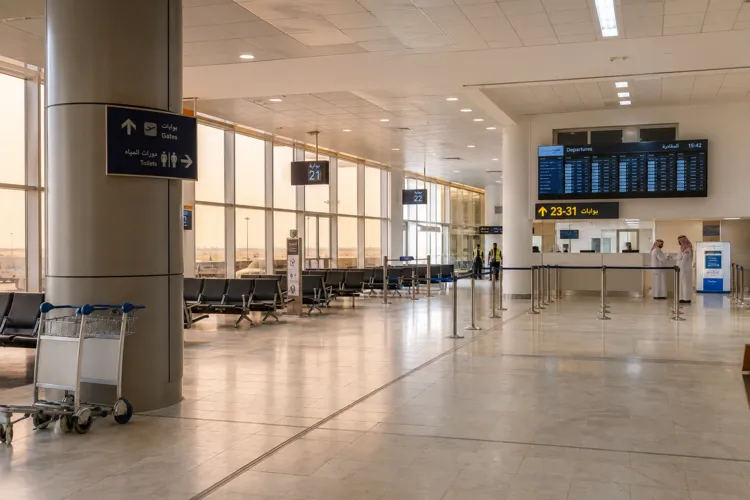
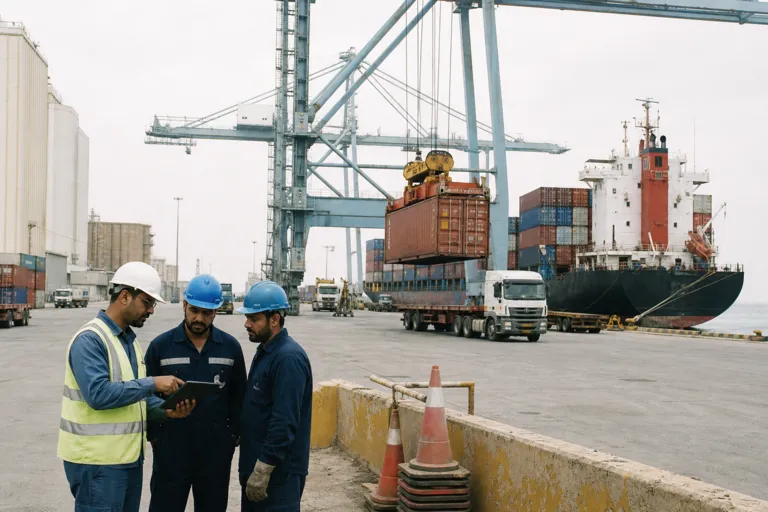
Regional tensions affecting key shipping lanes have pushed shippers and carriers to reassess where they consolidate and redistribute cargo. In that context, Saudi Arabian ports are increasingly described as an alternative for international commerce, with infrastructure designed for high capacity and logistics resilience. Within the Mawani-managed network, there are 290 berths across the Kingdom. On the Red Sea, Jeddah Islamic Port is described as the principal commercial gateway, spanning about 12.5 square kilometers with 62 berths and handling over 130 million tonnes of cargo yearly. Against this backdrop, King Abdullah Port is positioned as a large, private-sector transshipment site with an annual capacity of 25 million TEUs.
The “hub” ambition is not just about location on the Red Sea. It is also about whether a port can absorb schedule disruption, handle mega-ship calls, and keep cargo moving through customs and onward connections. A Saudi logistics strategy described under the National Transport and Logistics Strategy emphasizes integration across ports, rail, roads, dry ports, and logistics zones. In parallel, Mawani-managed ports handled 8,317,235 TEUs in 2025, up 10.58% from 2024, highlighting that container activity exists even as routes shift. For a King Abdullah Port transshipment hub narrative to hold, the value proposition has to be reliability, scalability, and speed when networks are under strain.
Rerouting Creates Openings, but Also Traffic Shocks
Red Sea disruption has produced uneven outcomes. One industry report links the migration around the Cape of Good Hope to a dearth in east-west box traffic for Saudi ports, “most notably King Abdullah Port,” and says this resulted in a more than 80% drop in box business at King Abdullah Port and up to a third of TEU totals in Jeddah. The same report notes that initial figures published by Mawani suggest at least some traffic was clawed back in 2025, though still well down on pre-crisis levels. In other words, the bet on rerouting is not a straight line. It can also mean sudden demand gaps if key loops bypass the Red Sea entirely.
Competition for transshipment is also global, and leading hubs show what “scale plus systems” looks like. In Singapore, throughput reached 41.12 million TEU in 2024, and about 85% of that was transshipment cargo, according to a market report that also ties Red Sea diversions to schedule disruption. That report adds that diversions could add up to two weeks on Asia-Europe schedules, pushing 90% of sailings off timetable and funneling overflow to Singapore. The comparison matters because it shows how rerouting can redirect volumes quickly to established hubs, and why any Red Sea facility must compete on operational consistency, not only geography.
Saudi Arabia is also investing in adjacent capacity and logistics real estate that can influence where transshipment and gateway flows concentrate. At Jeddah Islamic Port, DP World broke ground in May 2024 on the USD 250 million Jeddah Logistics Park, a 415,000 square metre facility under a 30-year agreement with Mawani. The same report says the first phase of a terminal redevelopment was completed, more than doubling capacity from 1.8m TEU to 4m TEU, within an USD 800 million project that includes scope to expand to 5m TEU. These moves do not automatically solve a King Abdullah Port volume shock, but they do show how the Red Sea corridor is building optionality to capture cargo when services return or new loops are created.
What is King Abdullah Port’s stated container capacity as a transshipment hub?
How did Red Sea rerouting impact container activity at King Abdullah Port?
What do the latest figures say about overall container handling in Mawani-managed ports?
Why is Singapore used as a comparison point for transshipment under rerouting disruption?
What logistics and terminal investments were reported at Jeddah Islamic Port?