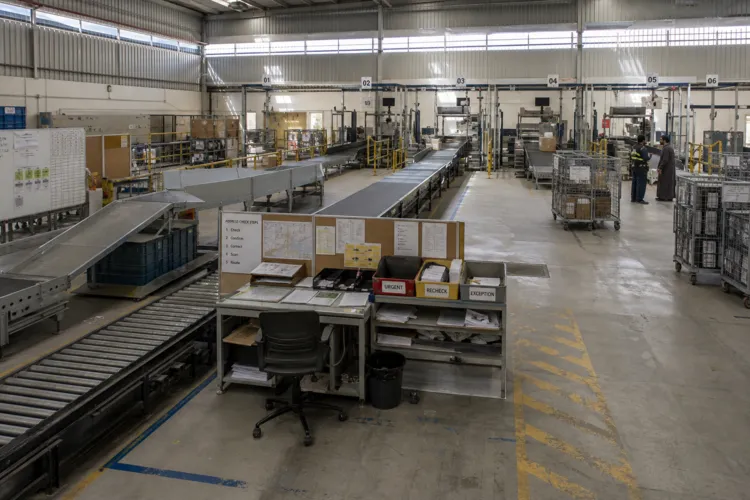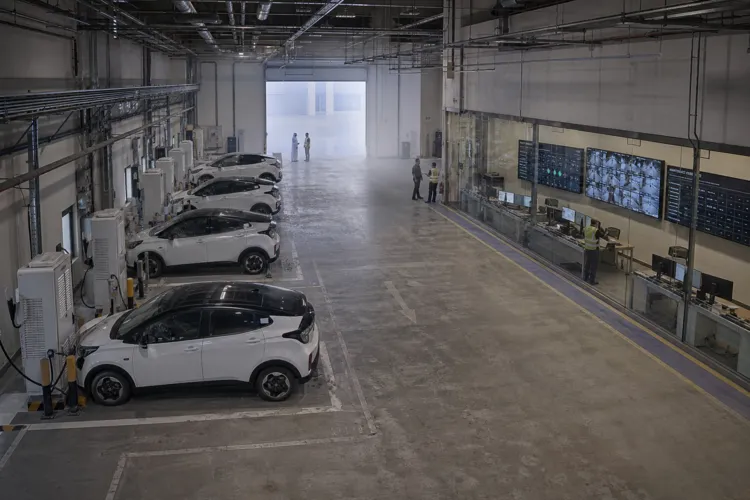
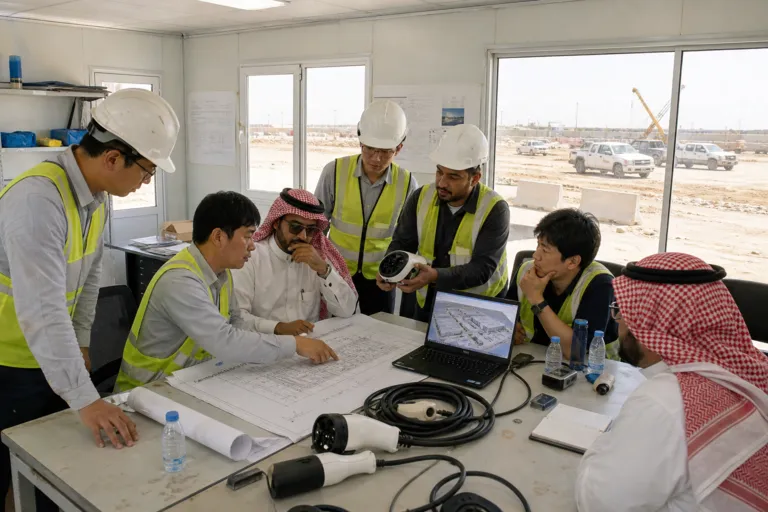
The Foxconn FIT Saudi EV charger plant is being built through a new joint venture in Saudi Arabia. Foxconn Interconnect Technology (FIT), a unit of Taiwan’s Foxconn that makes components used for connectivity and in servers, launched the joint venture called Smart Mobility in May with Saleh Suleiman Alrajhi and Sons, according to Reuters. FIT said the Saudi joint venture will start building its first manufacturing base in the Middle East in December. The facility is expected to make electric vehicle chargers, putting charging hardware at the center of the partnership’s initial manufacturing focus.
The schedule is already defined in the public reporting. FIT chairman Sidney Lu said the new factory is expected to begin production in 2026, Reuters reported. That gives the project a near-term build-and-ramp plan rather than an open-ended industrial announcement. The factory is described as the joint venture’s first manufacturing base in the Middle East. It is positioned as a practical step toward developing local output tied to EV charging, not just importing equipment for the Saudi market.
Why Saudi Arabia’s 2030 Electrification Goal Shapes the Plant
Saudi Arabia’s policy direction is explicitly referenced by the joint venture’s leadership. “One of our targets as a country in Saudi Arabia (is that) by 2030, 30% of the cars have to be electrified,” said Smart Mobility’s CEO Prince Fahad bin Nawaf Al Saud, as quoted by Reuters. For a charger factory, that target matters because electrified vehicles need dependable charging access. It also signals why manufacturing capacity for chargers is being prioritized inside the kingdom rather than handled only through overseas supply chains.
FIT’s EV push is tied to earlier steps it took in Europe. Reuters said FIT expanded into EV connectivity and charging through its acquisitions of Germany’s Prettl SWH group, renamed FIT Voltaira, in 2023 and Auto-Kabel Group in 2024. That history helps explain why the Saudi project is framed around chargers and connectivity. FIT is not presenting itself as a newcomer to EV-adjacent hardware. It is extending an existing mobility segment into a new regional manufacturing footprint through the Smart Mobility structure.
Financially, FIT is pointing investors and partners to its auto mobility segment as a growth engine. Reuters reported that Lu said the company’s revenue from the auto mobility segment is expected to reach $700 million this year. The report does not break down how much of that is chargers versus other mobility components. Still, it signals the scale FIT associates with its mobility business as it builds a plant dedicated to EV chargers. The Saudi site is therefore aligned with a segment where FIT already expects substantial annual revenue.
Saudi charging buildout goals also appear in broader market reporting, even if they are not directly part of FIT’s announcement. CleanTechnica reported that the PIF-backed Electric Vehicle Infrastructure Company (EVIQ), a joint venture between the sovereign wealth fund and the Saudi Electricity Company, is targeting 5,000 fast chargers across 1,000 locations by the end of the decade. That target is not described as the output plan for Smart Mobility. But it shows the kind of infrastructure ambition that can increase demand for chargers produced locally, which is the strategic backdrop for the Foxconn FIT Saudi EV charger plant.
What is the Foxconn FIT Saudi EV charger plant?
When will construction and production start for Smart Mobility’s factory?
Who are the partners behind Smart Mobility?
What Saudi target is Smart Mobility linking to electrification?
How does FIT describe its EV-related expansion before this Saudi project?