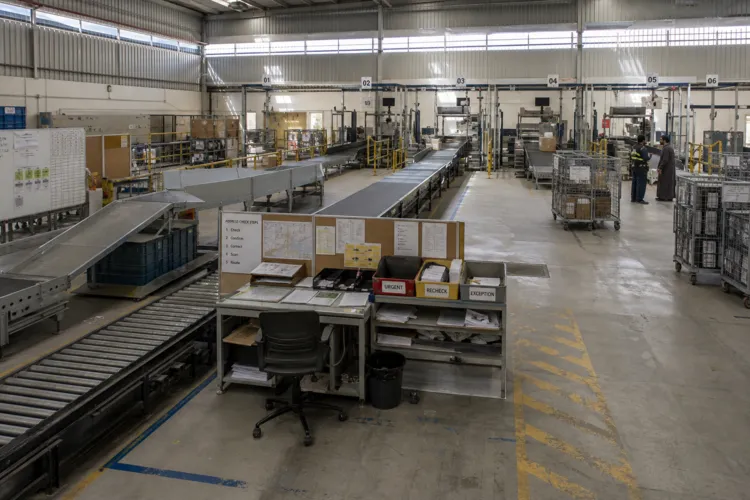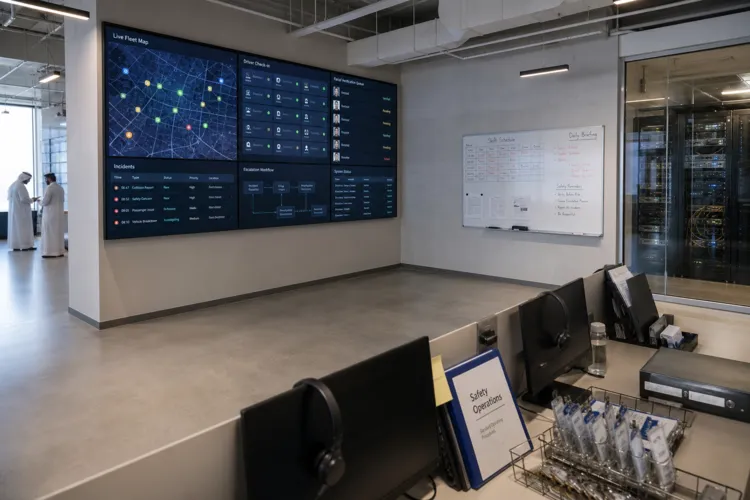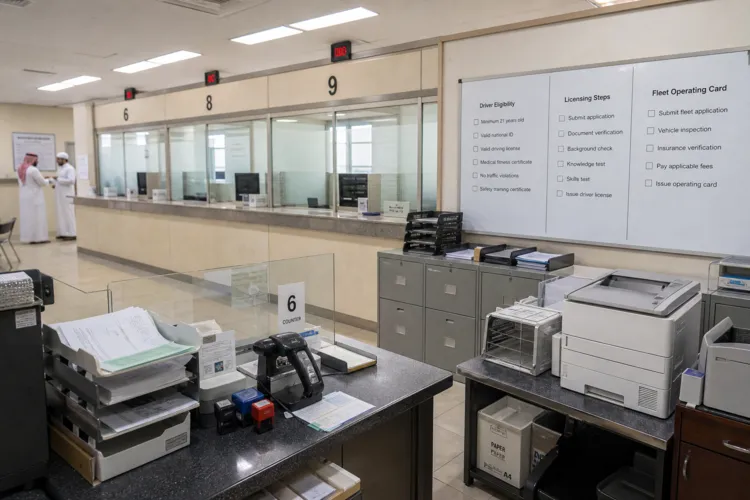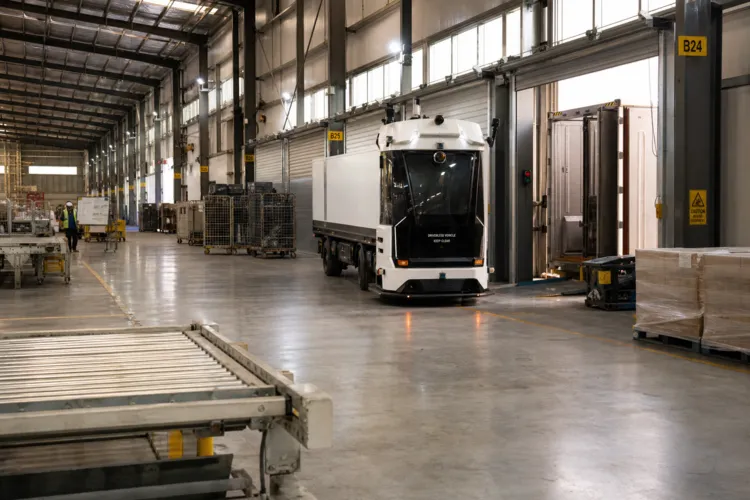
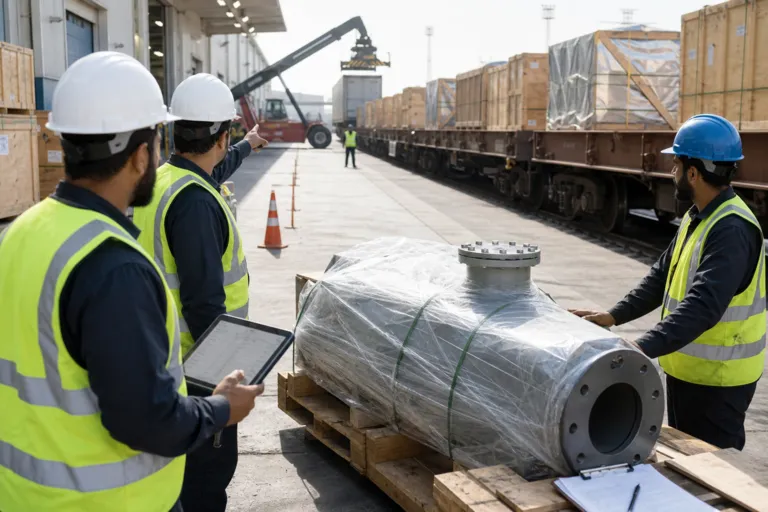
Diriyah, home to the UNESCO-listed At-Turaif district, is undergoing a $63.2bn transformation intended to become a fully walkable urban hub just minutes from Riyadh. The first phase alone is designed to host 100,000 residents and attract up to 50 million annual visits. Those scale markers imply sustained inflows of non-routine materials, construction systems, and time-critical items that do not behave like standard containerised freight. This is where project logistics matters: it is built for oversized, sensitive, urgent, and non-routine cargo, and it relies on precise planning, specialised transport, customs brokerage, and secure tracked warehousing of many components.
For project cargo headed to Riyadh, the most practical question is often not only how shipments enter the Kingdom, but how they transition from a maritime gateway to inland handling with fewer handoffs. An example of this integrated approach appears at King Abdulaziz Port Dammam (KAPD), where an adjacent Dammam Integrated Logistics Zone spans 1 million square metres and represents an investment of up to SAR 1.3 billion. The zone will be managed by SGP Freezones and is designed to provide modular warehousing, cold chain and vehicle storage facilities, re-export and light manufacturing zones, and container handling within an integrated system. Critically for inland delivery, it is described as linked directly to SGP Container Terminals, SGP Multipurpose Terminals, and SGP Intermodal, which is identified as the Riyadh Dry Port Ecosystem.
Why Integrated Gateways Matter for Megaproject Cargo
Project cargo is about controlling exceptions. Even in non-aviation examples, the discipline is illustrated by operations that include a rapid 30-day teardown and the secure, tracked warehousing of thousands of recovered components, plus specialist transport and customs brokerage. The same logic applies when a megaproject must keep build sequences moving. On the maritime side, infrastructure improvements can increase throughput and reduce waiting time for vessel-side operations. At KAPD, the Terminal 2 expansion adds 225 metres to the existing 700 metres of quay length. Combined with Terminal 1, the consolidated handling capacity will rise to 3.8 million TEUs in 2025. For Diriyah-bound supply chains, that sort of port-side capacity is most useful when it connects cleanly into inland intermodal flows, including the Riyadh Dry Port ecosystem described in the same logistics-zone announcement.
Inland, rail freight performance depends on safety, visibility, and the ability to coordinate movements across a network under pressure. A technology signal comes from a Memorandum of Understanding between Ericsson and the Saudi Railway Company (SAR) to introduce 5G and Future Railway Mobile Communication System (FRMCS) technologies across the Kingdom’s rail network. The collaboration includes deploying 5G-based infrastructure and developing applications such as real-time video, train control, and IoT connectivity, alongside an innovation centre for testing solutions and training SAR’s workforce. For a megaproject programme, these capabilities support the operational discipline project logistics requires: better situational awareness, more predictable movements, and tighter control over exceptions that can disrupt site delivery.
Finally, it helps to view Riyadh-area cargo as multimodal, not single-mode. Even though this article focuses on Diriyah Gate dry port rail freight, the broader Riyadh logistics picture includes air cargo digitisation and tracking. A Riyadh cargo handling agreement referenced a 60,000m2 airfreight terminal in Riyadh with specialised areas for pharmaceuticals, e-commerce, live animals, valuables, and hazardous materials, plus technology for real-time tracking and data-driven decision-making. Separately, a cargo division launch referenced a widebody fleet comprising up to 122 Boeing 787s and Airbus A350-1000s, and highlighted centralised airway bill control and data visibility, plus digitally-tracked lightweight load containers. For Diriyah’s construction and fit-out phases, that mix of tracking, handling specialisation, and inland intermodal links is the operating model that can reduce uncertainty and keep complex deliveries flowing to site.
What does “Diriyah Gate dry port rail freight” imply for project cargo planning?
What is the stated scale of the Diriyah transformation in the sources?
Which logistics development is explicitly linked to the Riyadh Dry Port ecosystem?
What port expansion figures are given that may support inland freight flows?
What rail digitisation initiatives are mentioned for SAR?