Saudi Arabia operates a network of more than 11 major commercial and industrial ports spread across the Red Sea and the Arabian Gulf, giving shippers routing flexibility across two coasts. In this system, Dammam Port is described as the vital eastern gateway, serving energy, construction, and petrochemical sectors, and linking to the capital via a direct rail connection. For freight moving to Riyadh, one logistics perspective notes that routing through Dammam and transferring by rail to Riyadh Dry Port can be faster and more cost-effective than trucking from Jeddah. This positioning helps explain why modernization and automation at the eastern gateway matter for importers and exporters focused on Gulf-side access.
At King Abdulaziz Port Dammam (KAPD), Saudi Global Ports Group (SGP) has highlighted operational scale and long-term ambitions through concrete milestones. SGP Container Terminals has surpassed 15 million TEUs in cumulative container throughput handled at KAPD since it began operations in 2015. In parallel, the Saudi Ports Authority (MAWANI) is described as working to transform KAPD into a smart port operating with 5G technology, aligning with SGP’s digital initiatives to automate operations and enhance efficiency. SGP also plans to invest over SAR 700 million to upgrade and modernize four terminals located along the Eastern Coast at KAPD, Jubail Commercial Port, King Fahad Industrial Port Jubail, and Ras Al-Khair Port.
Terminal Expansion and the Investment Case for Smarter Operations
Physical expansion is moving alongside the drive for smarter, more automated workflows. SGP marked the inauguration of the Terminal 2 Berth Expansion and the groundbreaking of the Dammam Integrated Logistics Zone at KAPD. The Terminal 2 project adds 225 metres to an existing 700 metres of quay length, enabling two mega container vessels to berth simultaneously and improving operational capabilities. SGP has stated that, combined with Terminal 1, consolidated handling capacity will rise to 3.8 million TEUs in 2025. Nearby, the Dammam Integrated Logistics Zone spans 1 million square metres and represents an investment of up to SAR 1.3 billion, designed to expand logistics capacity and competitiveness next to the port complex.
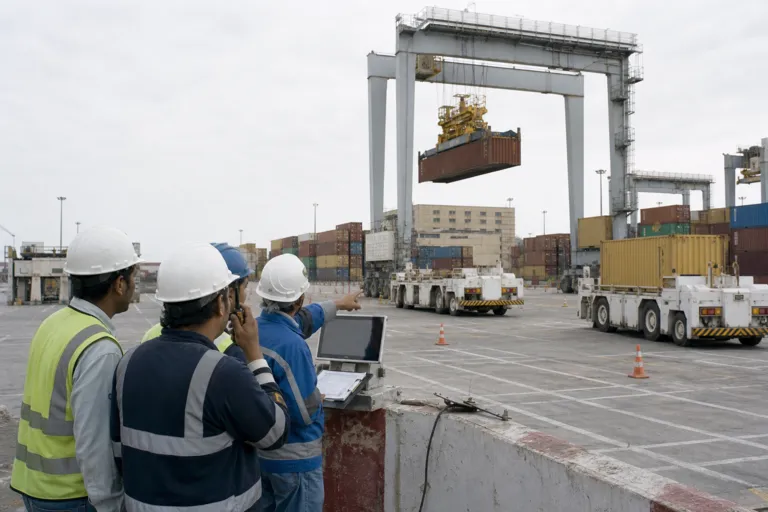
Automation has already become a visible benchmark in Saudi port operations, offering a point of comparison for stakeholders tracking the Dammam port automated terminal topic. A fully automated, state-of-the-art terminal is described at the Red Sea Gateway Terminal, where around 70,000 TEUs pass through, supported by a port operating system and a footprint covering 50 hectares. While that figure is not presented as a Dammam metric, it helps frame how digital systems and automated processes are being discussed in the wider national port context. For Dammam, the sources point to MAWANI’s smart-port direction with 5G and to SGP’s automation and digital initiatives as part of an efficiency agenda tied to much larger capacity goals under a 30-year concession.
These port moves sit within a broader logistics market that is scaling with Vision 2030–aligned infrastructure investment. One market report values the KSA logistics and warehousing market at approximately USD 37.8 billion in 2024 and expects growth at a CAGR of ~10%. The same source notes public investment exceeding SAR 100 billion in SEZs, dry ports, and transport corridors, and it positions the Eastern Province hubs such as Jubail and Dammam as dominant due to industrial activity and direct rail and port connectivity for petrochemical and trade flows. Separately, container and cargo references underscore the importance of seaports to the system, including Jeddah Islamic Port handling over 5.1 million TEUs in 2023, and King Abdulaziz Port in Dammam processing more than 4.5 million tons of general cargo.
What capacity level is stated for King Abdulaziz Port Dammam after the latest terminal consolidation?
How large is the Dammam Integrated Logistics Zone and what investment level is cited?
What has SGP reported about historical container throughput at KAPD?
What is MAWANI working toward in terms of smart-port capabilities at KAPD?
In context, what example of full automation is cited in Saudi port operations?