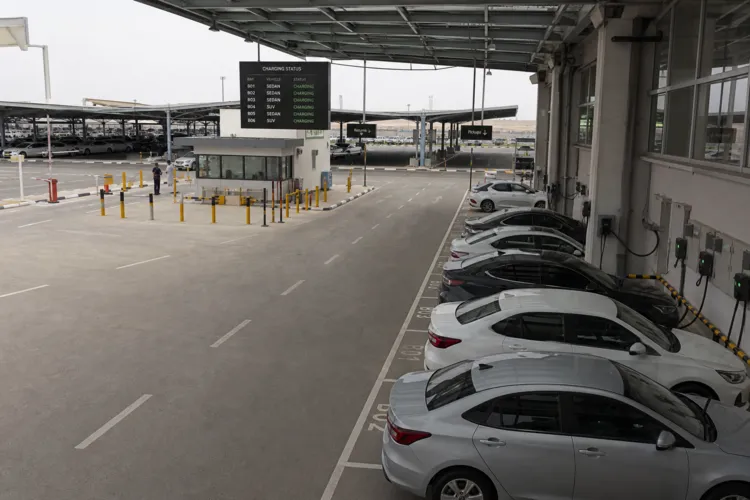
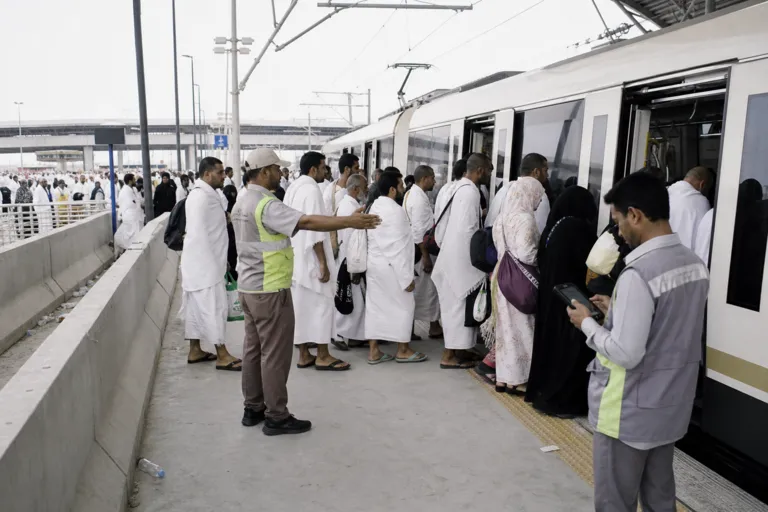
Hajj creates movement needs that are intense, time-bound, and concentrated between the holy sites. In 2026, Saudi Arabia’s Al Mashair Metro is positioned as a seasonal rail backbone built around pilgrimage patterns rather than daily commuting. Multiple reports describe a system engineered for heavy demand: 17 electric trains, each designed to carry about 3,000 passengers, operating across an integrated network of nine stations linking Mina, Arafat, and Muzdalifah. Peak throughput is reported at around 72,000 passengers per hour, and one source frames it as 72,000 passengers per hour in each direction. In this environment, rail is less a convenience and more a crowd-mobility tool.
The operational plan for the 1447 AH season emphasizes volume and rhythm. Sources state that the metro is scheduled to run about 2,000 trips during the season and aims to move more than two million passengers across the holy sites during the ritual days. The aim is to reduce pressure on road traffic and support coordinated movement with security and service authorities. Several outlets also note that the metro can replace more than 50,000 bus trips during the Hajj season, describing a direct connection between high-capacity rail and less roadway congestion. This is where the Al Mashair Metro Hajj 2026 story becomes about systems design, not only trains.
Inside the Rail Design: Stations, Speed, and Seamless Transfers
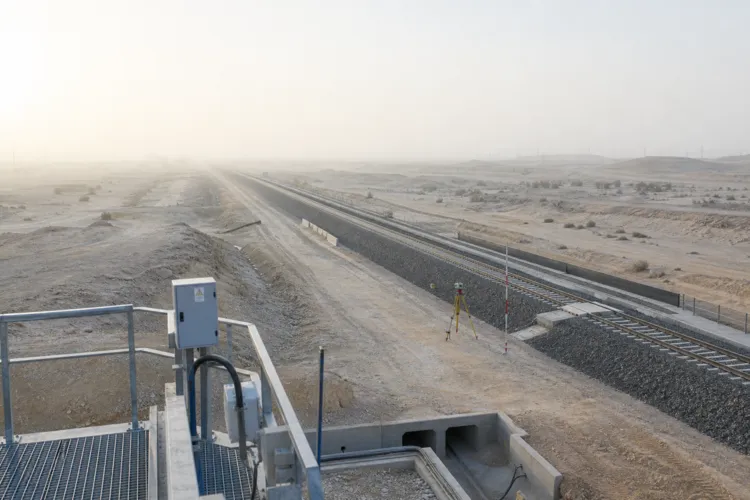
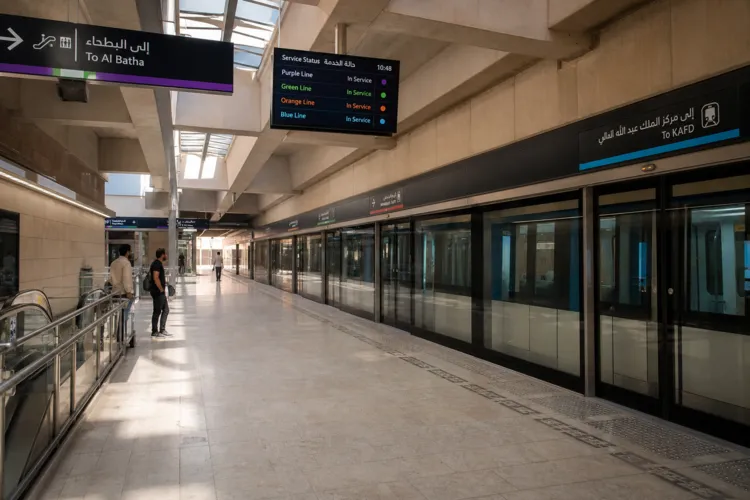
The line is repeatedly described as connecting the three holy sites via an 18-kilometre rail corridor with nine stations, including three stations each in Mina, Muzdalifah, and Arafat, plus a station at Jamarat. One report adds a crucial flow detail: the line culminates at Mina Station 3, where direct access into the fourth level of the Jamarat Bridge complex allows arriving crowds to join ritual pathways without intersecting busy road conduits at ground level. Another source states the electric train can reach speeds of up to 80 km/h, while travel time between Mina and Arafat is described as roughly 20 minutes, compared with historical bus-based transit during congested periods.
Capacity is not only about train size; it is also about reliability under stress. Saudi Arabia Railways (SAR) is cited as completing maintenance and preparation works for the fleet ahead of the season, including upgrades to signaling, communication systems, and the control center, with improved station technology and a strengthened centralized control infrastructure also mentioned. The goal described across sources is safe, efficient operations and operational readiness. The trains themselves are described as fully electric and eco-friendly, with sources explicitly connecting electrification to environmental sustainability goals through reduced emissions and improved traffic flow during one of the world’s densest seasonal crowd events.
Context also shows this is a long-running Hajj-focused asset that is being refreshed for current demands. Arab News notes the metro line entered service in 2010 and remains one of the Hajj season’s major transport projects. Wikipedia similarly frames it as used exclusively as a shuttle train for pilgrims between holy sites to reduce congestion caused by thousands of buses and cars during Hajj. In 2026, the narrative from multiple sources is that rail is replacing large volumes of vehicle movements over a compressed timeframe, shifting the conversation from basic crowd control toward precision mobility planning aligned with Saudi Vision 2030.
What peak passenger throughput is reported for the Al Mashair Metro during Hajj 2026?
How many trains run on the Al Mashair Metro for the 1447 AH season, and how many passengers fit per train?
How many trips and passengers are targeted in the Hajj 2026 operating plan?
How does the metro change movement between Mina and Arafat during Hajj 2026?
What does the metro replace on the roads during the Hajj season?