

Transforming Urban Mobility Services for People-Centric Cities in Saudi Arabia
Issues
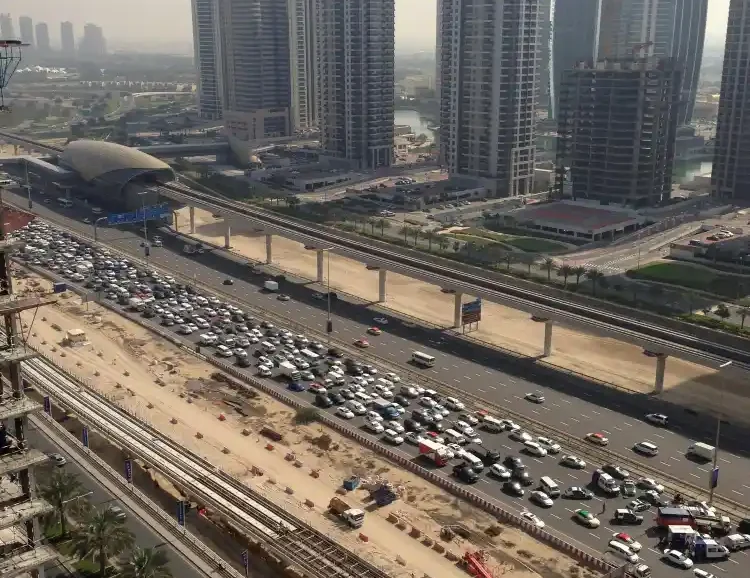
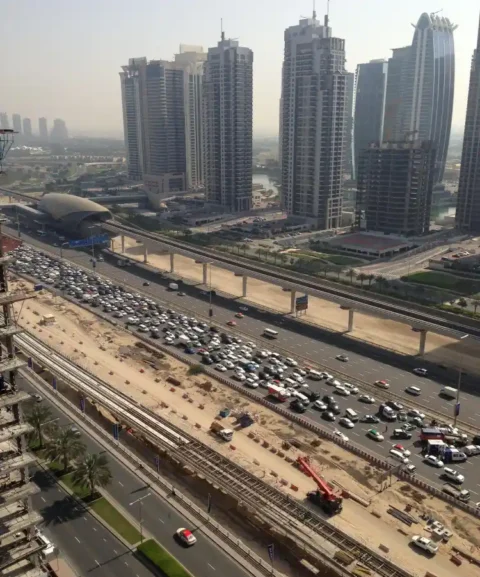
The city was dominated by private vehicles with low uptake of public transport and minimal shared mobility services. There was limited infrastructure for pedestrians, cyclists, or e-scooter users. Public transport routes were disconnected from residential neighborhoods. Parking inefficiencies, unregulated curb usage, and a lack of data transparency further worsened traffic and emissions. Citizens had low awareness of alternatives to private vehicles, leading to increasing urban sprawl and environmental costs.
Solution
Approach
- Assessed transport behavior using mobile location data and urban density analysis
- Mapped first-mile and last-mile gaps in public transit routes
- Launched pilot zones for shared e-scooters and e-bike lanes
- Developed a MaaS app integrating bus, taxi, ride-hail, and micromobility
- Introduced smart parking sensors and dynamic pricing for curb usage
- Partnered with private operators for shared mobility fleet deployment
- Developed non-motorized mobility plan to enhance walkability
Recommendations:
- Expand smart parking and congestion pricing to manage peak traffic flow
- Design shaded, accessible pedestrian routes around public transport stops
- Enforce urban regulations for curbside usage to support pick-up/drop-off
- Incentivize shared mobility usage through loyalty and green commute credits
- Set up centralized data exchange platform for all mobility providers
- Include real-time MaaS data in city traffic control center operations
Engagement ROI
Private vehicle usage decreased by 16% in the core CBD, while shared mobility usage increased by 2.1x in the first 6 months. The MaaS app was downloaded by over 95,000 users, reducing average door-to-door commute time by 12 minutes. Smart parking sensors improved space utilization by 37%, and curbside conflicts declined by 48%. Carbon emissions from personal vehicle trips dropped by an estimated 3,800 tons CO₂/year.