

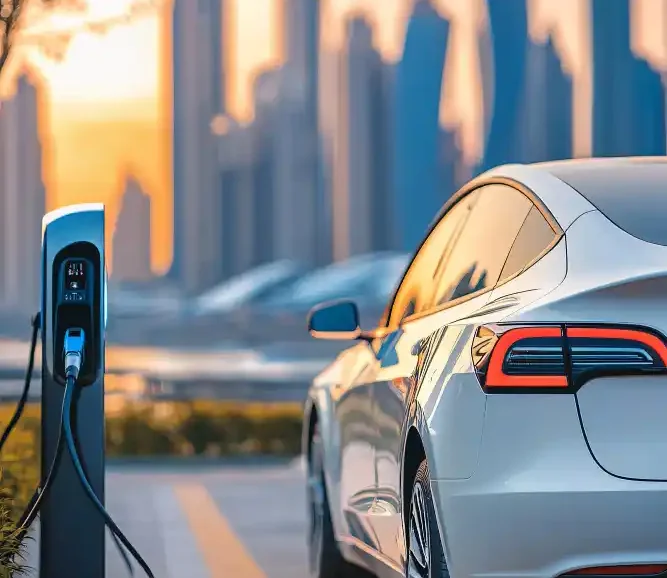
Developing an Inter-City EV Charging Network Across Saudi Arabia
Issues
There was no unified charging network outside of urban centers, creating range anxiety for EV users and preventing long-distance electric travel. Highway rest stops lacked infrastructure or grid capacity, and there were no standards for charging station interoperability, pricing, or maintenance. Inconsistent land permitting processes delayed infrastructure deployment, and private sector interest was limited due to unclear ROI models.
Solution
We created a National Inter-City EV Charging Network Blueprint. This included priority route mapping, charging technology mix (fast vs. ultra-fast), grid readiness assessments, and a public-private partnership model to attract investment. Standardized design, branding, and pricing models were proposed to ensure user familiarity across regions. We also introduced a phased roll-out plan starting with high-traffic corridors and piloted solar-assisted fast-charging hubs.
Approach
- Mapped traffic flows and EV registration data to identify priority routes
- Assessed rest stop infrastructure, grid connections, and land ownership constraints
- Proposed optimal charger spacing and mix based on driving patterns and climate
- Developed investment models including CAPEX/OPEX projections and subsidy scenarios
- Designed centralized monitoring for uptime, availability, and energy sourcing
- Drafted regulatory templates for land leases and utility coordination
- Built a business case to attract private operators and station OEMs
Recommendations:
- Prioritize Tier 1 corridors (Riyadh–Dammam, Jeddah–Makkah, Riyadh–Jeddah) for initial deployment
- Mandate charging station interoperability across providers
- Set national standards for safety, signage, and maintenance
- Use dynamic pricing to balance grid loads and encourage off-peak charging
- Co-locate charging stations with food, retail, and rest area amenities
- Monitor usage patterns to inform future expansion and charger upgrades
Engagement ROI
Within 18 months, 162 fast-charging stations were deployed across 8 major corridors. Average EV travel time between cities was reduced by 25%, and long-distance EV usage increased by 73%. Private sector investment reached SAR 380 million, supported by risk-sharing mechanisms. Grid integration pilots achieved 94% uptime, and carbon savings from inter-city EV travel were estimated at 13,400 tons CO₂ annually.