

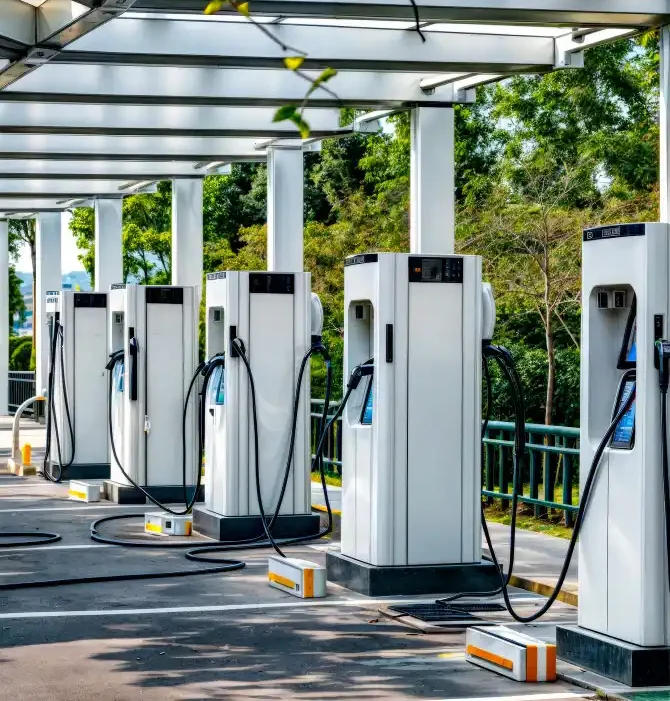
The EV infrastructure landscape lacked cohesion. Charging stations were clustered in wealthier urban areas, with rural and industrial zones underserved. Utilities were uncertain about grid upgrade timelines and load balancing needs. Building codes did not require EV readiness, and there was…

Developing an Inter-City EV Charging Network Across Saudi Arabia
There was no unified charging network outside of urban centers, creating range anxiety for EV users and preventing long-distance electric travel. Highway rest stops lacked infrastructure or grid capacity, and there were no standards for charging station interoperability, pricing, or maintenance….

Saudi Mobility Market Research to Support Data-Driven Transport Investment
The mobility landscape was undergoing rapid change, yet up-to-date, granular market data was lacking. Existing research relied heavily on outdated census data or fragmented surveys. There was minimal insight into the behaviors of young and digital-native populations, regional variations in mobility…

Implementing Sustainable Transport Strategies at City and Regional Levels
Despite sustainability goals at the national level, city-level implementation was inconsistent. Green infrastructure projects lacked funding prioritization, and there was minimal alignment across local jurisdictions. Public fleet transitions were uncoordinated, and private sector involvement in sustainable transport was limited. Urban development…

Integrating Transportation Technologies for a Connected Mobility Ecosystem
Multiple transportation systems operated in isolation, including traffic signals, transit scheduling, ride-hailing platforms, tolling systems, and freight tracking. Data was not shared across platforms, and user interfaces lacked consistency. Public transport services had no real-time trip updates, and emergency response coordination…

Benchmarking Mobility Performance Across Saudi Cities to Guide Policy Decisions
There was no standardized framework to assess mobility performance across cities. Data collection was inconsistent, and cities lacked insight into how their transport systems compared to peers domestically or internationally. Without comparative benchmarks, cities struggled to prioritize interventions, secure funding, or…

Integrating Electric Mobility into Saudi Arabia’s Transportation Ecosystem
EV uptake remained low due to limited charging infrastructure, high upfront vehicle costs, and consumer concerns about range and reliability. Grid readiness varied by region, with unclear guidelines for public charger deployment. Fleet operators lacked incentive structures to transition from ICE…

Strategic Transportation Infrastructure Development for Long-Term Mobility Growth
Existing infrastructure development plans were reactive and lacked alignment across regions. Budget overruns and delays were common due to insufficient feasibility screening and unclear prioritization. There were imbalances in investment between freight corridors, airport linkages, and urban public transport projects. Environmental…

Deploying Smart Transportation Systems to Improve Traffic Efficiency in Saudi Cities
The client faced mounting congestion, unpredictable traffic flows, and rising emissions due to a lack of real-time monitoring and coordination between transport modes. Traffic lights operated on fixed schedules, and incident response times were delayed due to the absence of predictive…

Driving Sustainable Transport Initiatives Across Saudi Arabia’s Mobility Sector
Saudi Arabia lacked a coherent sustainable transport strategy, with overlapping and uncoordinated green initiatives. Fuel standards and electric vehicle incentives were inconsistently applied. There was no standardized emissions baselining framework, and data on transport-related emissions were incomplete. Municipalities lacked guidance on…